Repetition is one of the most frustrating issues people have to deal with when working with artificial intelligence. The AI assistant may give an excellent answer during one interaction, but then disappear when the next conversation happens. They will compensate by sharing the same information, files, or documents to ensure that a conversation is productive.
This strategy is getting less efficient as AI becomes more common in software. Intelligent systems must be able to save relevant information, retrieve it instantly and be able to recognize changes in information over time. Memory is one of the most important elements of AI architecture today.
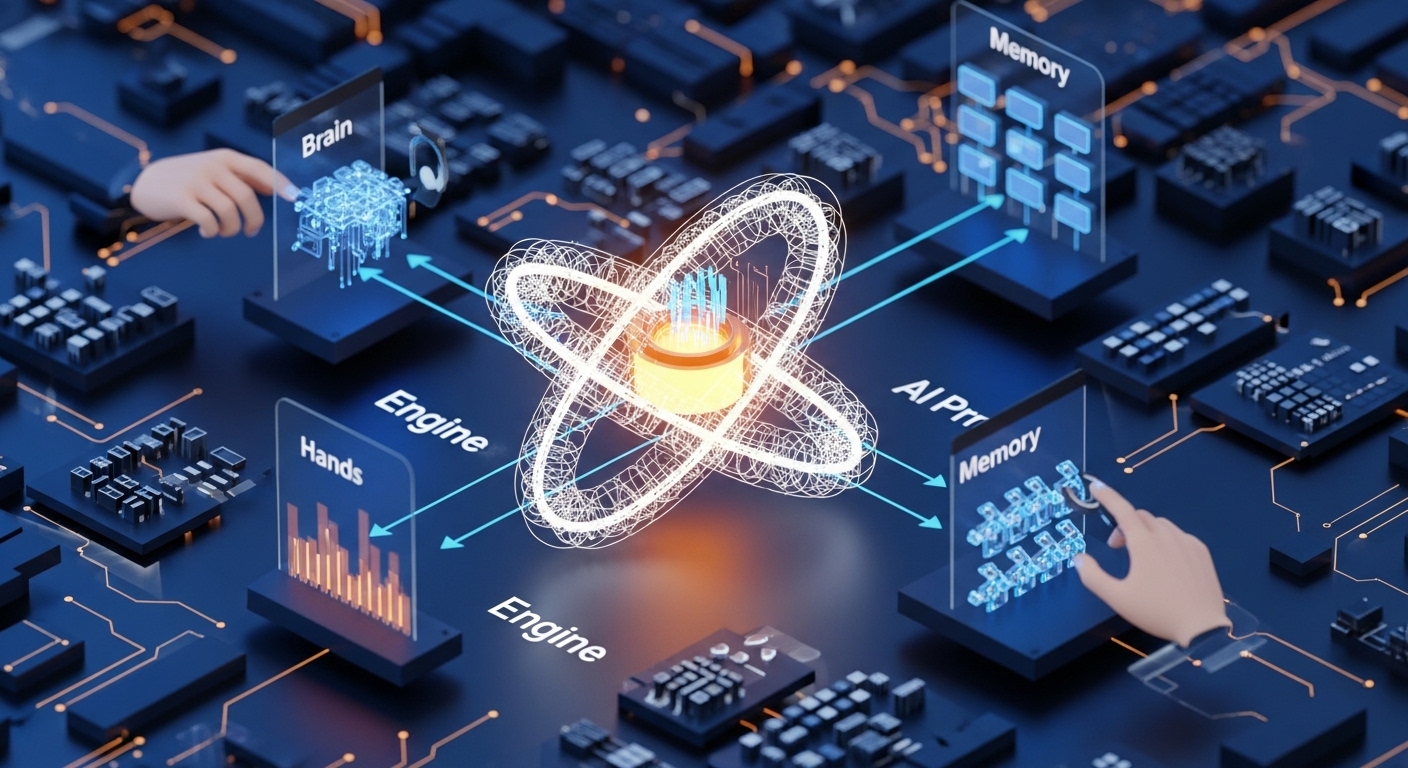
Memory transforms AI from reactive to intelligent
An AI system that remembers the previous work is very different from one that starts from scratch every time. Persistent memory lets applications be able to understand ongoing projects, spot frequent patterns and give solutions based on the historical context instead of isolated questions.
Telys was created to solve this challenge. It’s not a cloud service, but an embedded AI agent memory that stores and retrieves information directly within the application. This gives developers the security to preserve information while also reducing the need for computations and repetitive processing. This results in an AI experience that is significantly more natural due to the fact that the software recognizes what is important.
Localizing data improves speed and privacy
The speed that an AI model is able to generate text is not the sole way to gauge efficiency. The speed of retrieval, the system’s responsiveness as well as data security are now equally crucial for businesses that are deploying AI in their production.
Using on-device memory for AI agents allows applications to retrieve relevant information without depending on constant communication with external servers. Because memory is maintained in the local environment used by AI agents, queries can be executed more quickly, while also allowing organizations to keep better control over sensitive information. This architecture can be particularly advantageous for teams that are developing internal tools, enterprise-level software or privacy-sensitive software.
The memory behind the scenes can be a major benefit to developers
The development of intelligent software shouldn’t involve creating a complex infrastructure to save context. The developers are constantly looking for tools that are easily built into workflows already in place without adding any additional cost.
Local MCP memory server makes this possible by allowing compatible AI development tools access to persistent memory directly in the local environment. AI assistants don’t have to transfer data over remote APIs. Instead, they are able to access the data they require via an internal memory layer. This process speeds development and decreases the time it takes for teams who work on projects with changes to codebases or documentation.
AI’s future AI is based on a long-lasting context
Artificial intelligence moves beyond simple conversation to systems that are capable of analyzing and planning complex tasks independently. These systems require a solid memory to store data across all interactions.
Telys is a unique AI memory engine that offers persistent local retrieval to intelligent applications requiring speed, reliability and security. Telys is a combination of the device-specific AI memory agent and an extremely efficient local MCP memory services to help developers develop software that can remember past work, retrieves information instantly and improves over the period of time.
The ability to recall correctly can be as important as the ability of reasoning as AI is integrated more into business and products. In providing intelligent systems with long-lasting information instead of merely temporary conversations Telys helps developers create AI applications that are quicker more intelligent, more efficient, and more practical in the everyday workplace.